
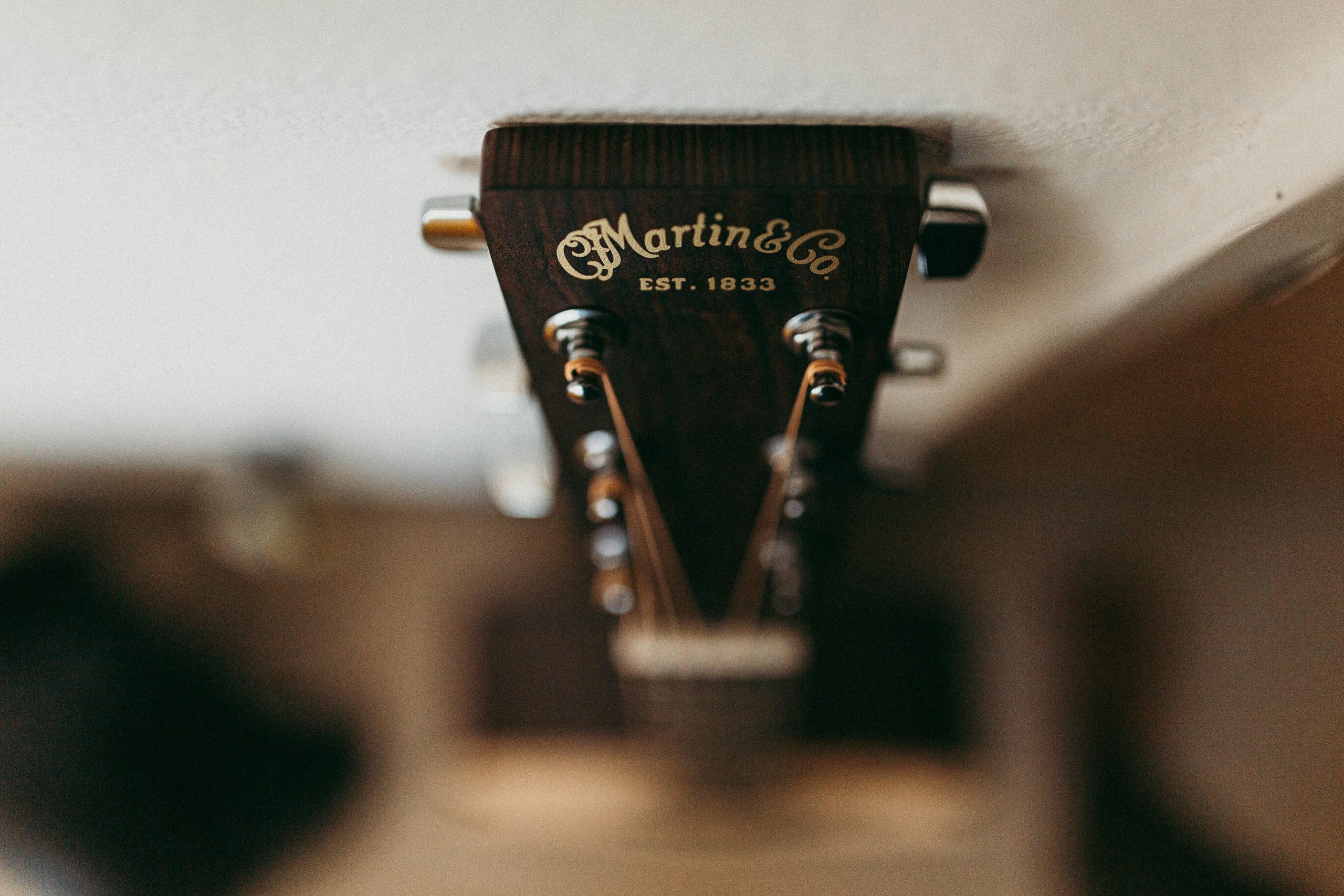
There’s a moment every guitarist knows. You pick up an instrument – maybe in a music store, maybe at a friend’s place – and the moment your fingers hit the strings, something shifts. The tone wraps around you. The neck feels right. The whole thing just sings in a way you weren’t expecting. And somewhere in the back of your mind, a quiet voice says: this is the one.
For me, that moment happened with a Martin & Co. acoustic-electric. And honestly? I haven’t looked back since.
I’m not a professional guitarist. I’m the kind of player who picks up the guitar after the kids are in bed, learns songs I love, and occasionally plays at a backyard gathering when someone asks nicely. And for an amateur like me, a Martin doesn’t just sound incredible – it makes me want to play. There’s a difference, and it matters.
Why Martin Is in a Category of Its Own
Let me start with a bit of context, because Martin & Co. isn’t just another guitar brand. Founded in 1833 in Nazareth, Pennsylvania, Martin is one of the oldest continuously operating guitar manufacturers in the world. Nearly 200 years of refinement, innovation, and craft go into every single guitar they produce. They invented the dreadnought body shape – the silhouette that defines what most people picture when they think of an acoustic guitar. That’s not a footnote. That’s a legacy.
And you can feel it the moment you play one.
The tone that Martin produces is widely described by musicians as the classic acoustic guitar sound – warm in the lower mids, full-bodied, rich, and with a beautiful bloom that lingers just a little longer than you expect. It’s the sound behind Bob Dylan’s folk anthems, Neil Young’s crunch, Paul McCartney’s ballads, and Ed Sheeran’s loop-station wizardry. That pedigree isn’t just marketing. It’s in the wood and the craft and the decades of refinement that go into each instrument.
My acoustic-electric is a knockout both unplugged and through an amp. The Fishman pickup system Martin uses on many of their acoustic-electric models is genuinely excellent – it captures the natural acoustic tone in a way that sounds like a studio microphone in front of your guitar, not a piezo under the saddle trying to fake it.
How Does Martin Stack Up Against the Competition?
Fair question. Let’s talk about the other big names, because if you’re spending real money on a quality guitar, you should know what else is out there.
Martin vs. Taylor
Taylor is Martin’s most direct peer, and the comparison is genuinely fascinating. Where Martin leans warm, traditional, and rich in the lower mids, Taylor produces a brighter, more modern sound with a clarity in the upper frequencies that suits contemporary pop and singer-songwriter material beautifully. Taylor’s Expression System 2 pickup is equally impressive. The honest answer is that neither is “better” – they’re different voices. Martin sounds like folk, country, and classic rock. Taylor sounds like the music being made right now. I personally reach for Martin’s warmth every time, but I’d never tell a Taylor player they chose wrong.
Martin vs. Gibson
Gibson acoustics are spectacular – particularly if you want that compressed, punchy rhythm guitar sound that suits singer-songwriters and Americana so well. Gibson’s Hummingbird and J-45 models are genuinely iconic. But Gibson quality control has historically been less consistent than Martin’s, and for sheer acoustic resonance and projection, most guitar players would give Martin the edge. Gibson wins for its electric guitars; Martin wins for acoustic purity.
Martin vs. Fender
Fender’s acoustic range is much more budget-focused. Models like the Fender CD-60S are excellent value for beginners and intermediate players – solid construction, decent tone, affordable price. But Fender’s acoustic identity has never matched its electric guitar legacy. When you’re comparing a mid-to-upper range Martin against an equivalently priced Fender acoustic, the Martin wins on tone, resonance, and craftsmanship without breaking a sweat. Fender is where you start. Martin is where you arrive.
Martin vs. Maton
Now here’s where it gets interesting for Australian players specifically. Maton is genuinely one of the great acoustic guitar brands in the world – a Melbourne-made, family-owned company that has been crafting instruments since 1946, with a proud heritage and some of the finest pickup systems available anywhere. Their AP5 preamp is legendary, and plugged in, a Maton on stage is hard to beat. Tommy Emmanuel, Keith Urban, and Joe Robinson all use them for good reason.
Where the comparison becomes nuanced is in the purely acoustic performance. Many players and enthusiasts note that where Martin excels is in raw, unplugged acoustic voice – the projection, the depth, the sustain. Maton’s strength, by general consensus among players who’ve owned both, is its plugged-in performance and value for Australian buyers (who get significant price advantages on home soil). If you primarily play on stage through a PA, a Maton is a seriously compelling choice. If you want a guitar that sounds extraordinary sitting in your lounge room with no amp in sight, Martin is hard to match.
For me – a player who mostly plays unplugged at home – the Martin’s acoustic voice was the decisive factor.
What I Actually Love About Playing Mine
Beyond the comparisons and the history, let me just tell you what it’s actually like to pick up my Martin every day.
The neck feels perfect under my hand. Not too wide, not too slim – just right for an amateur whose fingers aren’t as disciplined as they should be. The action is low enough that barre chords don’t feel like punishment. The fretboard is smooth and responsive. The whole guitar has a balance to it that cheaper instruments never quite achieve – you can feel it the moment you hold it, even before you play a note.
And then you play a note. And everything makes sense.
There’s a reason guitarists talk about their Martin the way car people talk about a classic they’ve owned for decades. It’s not just an instrument. It becomes part of how you think about music.
The Bottom Line
If you’re an amateur guitarist wondering whether a Martin acoustic-electric is worth the investment, I’ll make it simple: yes. Save up. Play one in a store before you commit. Feel how it sits in your hands. Listen to how it rings out.
Taylor, Maton, Gibson, and Fender are all excellent guitar brands making genuinely brilliant instruments. But for me, there’s something about a Martin that feels like the real thing in a way that’s hard to explain and impossible to forget once you’ve felt it.
The best guitar is always the one you actually want to pick up. For me, that’s been my Martin every single time.
Now go play something.